Why the Same Outfit Lengthens Your Legs One Day and Not the Next
Quick Answer: The eye reads leg length from where the visual break happens — the highest horizontal line it stops at. Change the shoe, the hem length, or whether the top is tucked, and you move that break by inches without changing the garment at all. The same trousers over ankle boots and over pointed flats produce genuinely different proportions. Control the break point and the outfit becomes consistent.
Same pants, same top. Tuesday you looked tall. Thursday you looked like you’d shrunk. Here’s what actually moved.
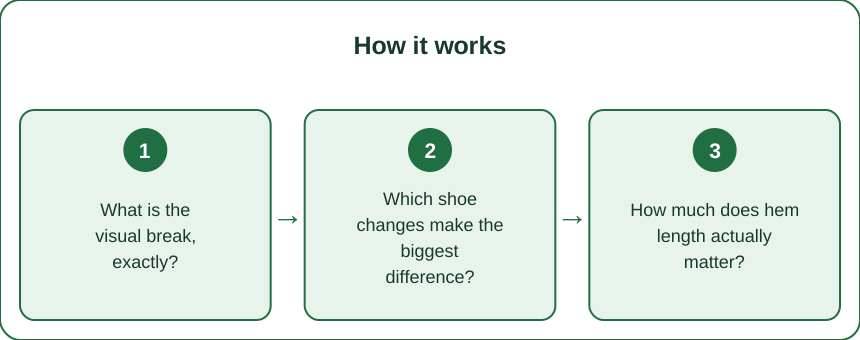
What is the visual break, exactly?
The highest horizontal line that interrupts the vertical run from waist to floor.
The eye reads continuous vertical lines as length. Anything that cuts across — a hem, a shoe strap, a contrasting waistband, a bag strap resting at hip level — creates a stopping point.
The higher that stopping point sits, the shorter the leg reads. The lower and less emphatic it is, the longer.
This is why the same outfit shifts. Different shoes move the lowest break. Tucking or untucking moves the top one. Neither changes the garment.
Contrast intensity matters as much as position. A hard color change at the ankle creates a strong break. A tonal transition barely registers. This is the entire mechanism behind matching shoe color to hem or to skin tone.
Once you’re watching for break points rather than for garments, outfits become predictable — which is the difference between styling and guessing.
Which shoe changes make the biggest difference?
Ankle coverage and the shoe’s color relative to whatever is above it.
An ankle strap is the strongest leg-shortening feature in common footwear. A horizontal line right at the narrowest point of the leg creates a hard visual stop. A strap that’s tonal with your skin or hosiery is far less disruptive than a contrasting one.
Ankle boots create a break at the ankle. Matching them tonally to the trouser makes the leg read continuous. A contrasting boot cuts it. Same boot, entirely different result depending on what’s above it.
Vamp height — how much of the top of the foot the shoe covers — matters more than most people realize. A low-cut vamp exposing more of the instep extends the visual line onto the foot itself. This is why pointed flats with a low vamp lengthen more than a rounded, high-cut shoe.
Shoes near your skin tone are the strongest lengthening option because they extend the line rather than terminating it. This works for any skin tone — the principle is proximity, not a specific color.
Heels help, but less than the break point does. A tonal flat with a low vamp often outperforms a contrasting heel with an ankle strap.
How much does hem length actually matter?
More than almost any other variable, and it’s the one most often left to chance.
Full-length trousers that just clear the floor create the longest possible line. The break happens at the floor, which is as low as it goes.
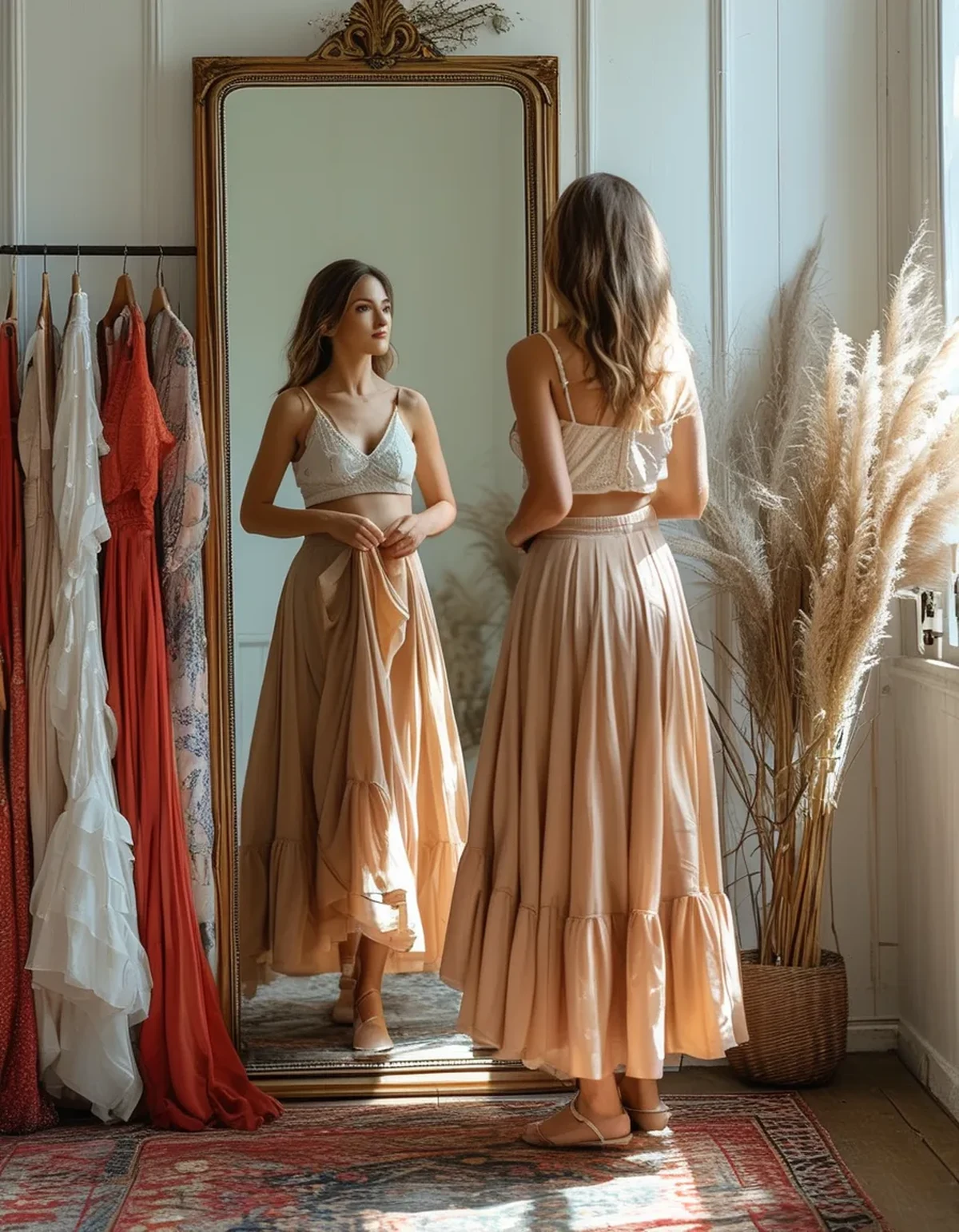
Cropped hems create a break wherever they end, and the specific spot matters enormously. Ending at the narrowest part of the ankle is flattering; ending at the widest part of the calf is the least flattering point on the entire leg.
An inch is a real difference here. This is why the same cropped trouser works on one person and not another — it’s landing at a different point on their leg.
For skirts and dresses, the same principle applies at the knee and calf. Just above the knee or just below the widest calf point read longer than mid-calf.
Hemming is the highest-return alteration available and it’s usually inexpensive. A trouser hemmed to your shoe height is a different garment from the same trouser off the rack.
If you wear both flats and heels, hem for the shoe you wear most, or own two pairs hemmed differently.
What Nobody Tells You About Proportion Illusions
Where your waist appears matters more than where your legs actually start.
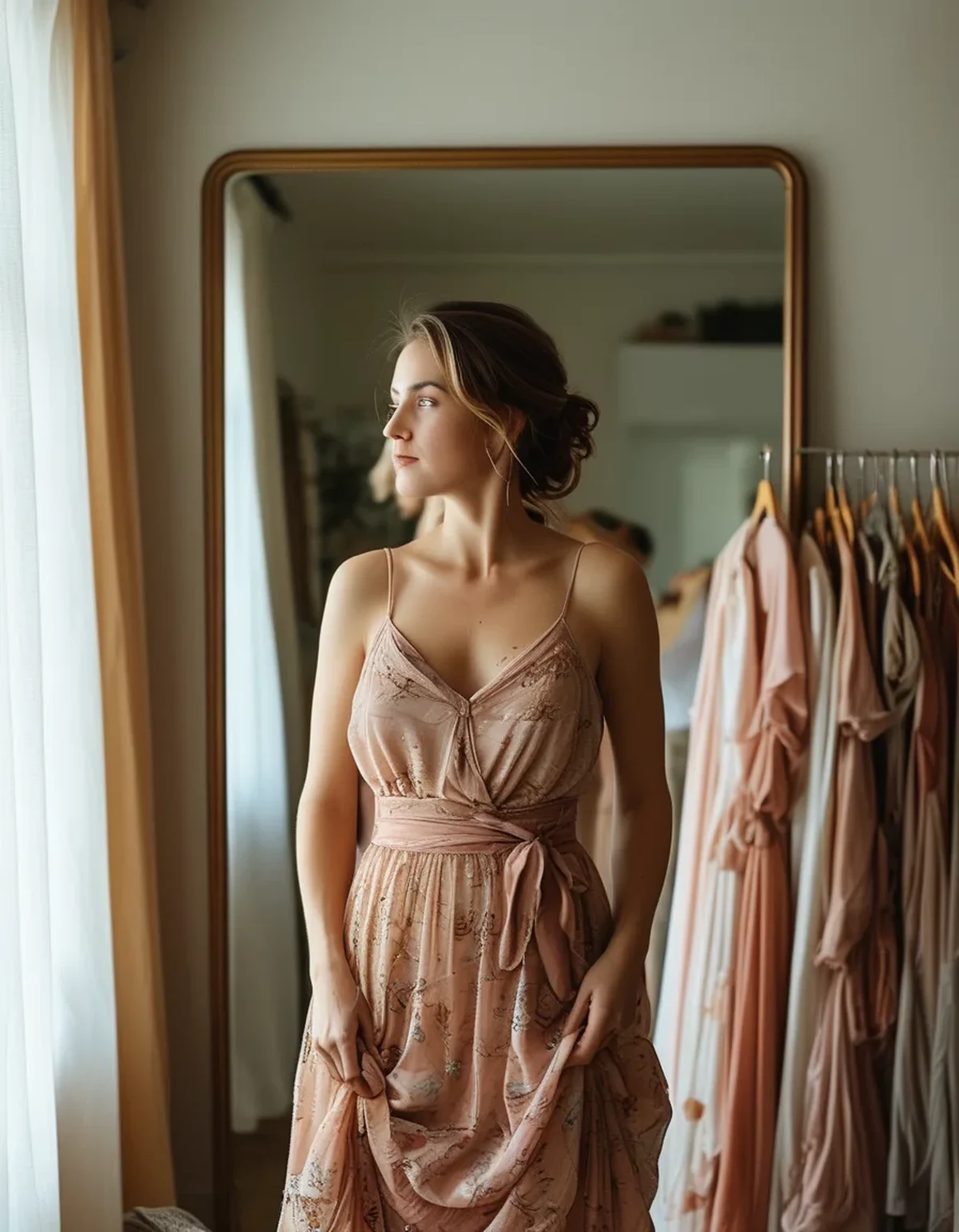
“Leg length” as read visually begins at the perceived waistline, not at the hip joint. Raising the visual waist lengthens the leg — which is the entire reason high-rise trousers work.
Tucking is the free version of this. A tucked or half-tucked top moves the visual break from wherever the hem fell up to the waistband, and that can be several inches.
But a tuck only lengthens if the waistband sits high. Tucking into a low-rise trouser can shorten the leg by creating a break below your natural waist. The tuck isn’t automatically good — the waistband height determines it.
Vertical continuity beats any single trick. Monochromatic dressing from waist to shoe is the most reliable lengthener available because it removes break points entirely.
Bag placement creates a break nobody accounts for. A crossbody strap ending at hip level draws a horizontal line right where you don’t want one. Adjusting the strap a few inches changes the outfit.
Lighting and mirror position affect what you see, not what others see. Overhead lighting foreshortens; a phone photo from below elongates and from above shortens. If your outfit looks different in different mirrors, that’s optics, not the outfit — judge from a photo taken at chest height from a few feet away.
And proportion tricks are optional. Every one of these is a tool for a specific effect, not a rule about what you should want.
How do I make it consistent day to day?
Standardize the variables you keep accidentally changing.
Identify your reliable hem points. For each pair of trousers, note which shoes it works with. Most inconsistency comes from wearing the same trousers with three shoe heights and getting three different results.
Take a photo of outfits that worked. Chest height, few feet back, full length. After a few weeks the pattern becomes obvious — and it’s usually about break points, not about which garments.
Match shoes to hems, or to skin. This one habit resolves most inconsistency. Contrasting shoes are a deliberate choice, not a default.
Check the tuck. If you tuck sometimes and not others, that’s an inches-level change in your visual break. Decide per outfit rather than by habit.
Watch the accessories that create horizontals — bag straps, belts, layered hems. A jacket that ends at the widest part of your hip creates a break that no trouser can undo.
And use a full-length mirror at a consistent distance and light. Half of “this looked different today” is genuinely the mirror.
FAQ: Leg Line Questions, Answered
Do I have to wear heels to look longer-legged?
No. A tonal flat with a low vamp, worn with a hem that just clears the floor, frequently reads longer than a contrasting heel with an ankle strap. Break points do more work than height does.
Does monochrome have to be black?
No — any tonal family works. The mechanism is the absence of a contrast line, not the specific color. Cream on cream, navy on navy, and brown on brown all do the same thing.
What about wide-leg trousers?
They can lengthen substantially because the fabric falls in a continuous vertical line, but only if the hem is right. Wide legs that puddle or that stop mid-calf lose the effect entirely — this is a style where hemming matters most.
Why does the same outfit look different in photos than in the mirror?
Camera height and lens distance change apparent proportion considerably. A photo taken from below elongates; from above, it shortens. A mirror at eye level from a few feet back is closest to how others actually see you.
TL;DR: You’re not changing the outfit. You’re moving where the eye stops.
- The visual break is the highest horizontal line interrupting the run from waist to floor. Lower and softer = longer.
- Ankle straps are the strongest shortener in common footwear. Tonal straps barely register.
- Low vamp extends the line onto the foot. Shoes near your skin tone lengthen more than heels do.
- Hem length is the highest-return variable — and an inch genuinely matters. Hem for the shoes you actually wear.
- A tuck only lengthens if the waistband is high. Tucking into low-rise shortens.
- Monochrome waist-to-shoe removes break points entirely — the most reliable trick there is.
And check your bag strap. A crossbody ending at hip level draws exactly the line you were avoiding everywhere else.
See It in Motion
Seen here: High Waist Wide Leg Yoga Pants with Pockets — shop it on bubblelime.com
Keep Reading
This article is for general informational and styling purposes only. Fit, sizing, and product availability may vary — check current details before purchasing.