Why the Same Vertical-Line Outfit Lengthens Some Legs More Than Others
Quick Answer: Vertical-line outfits lengthen legs most effectively when the line runs unbroken from waist to ankle, which means the effect depends heavily on where a specific body’s natural proportions place visual breaks like waistbands or hemlines — the same outfit can read differently depending on torso-to-leg ratio.
The advice sounds universal: wear one column of color, look taller. In practice, the same exact outfit lengthens some legs dramatically and barely moves the needle for others.
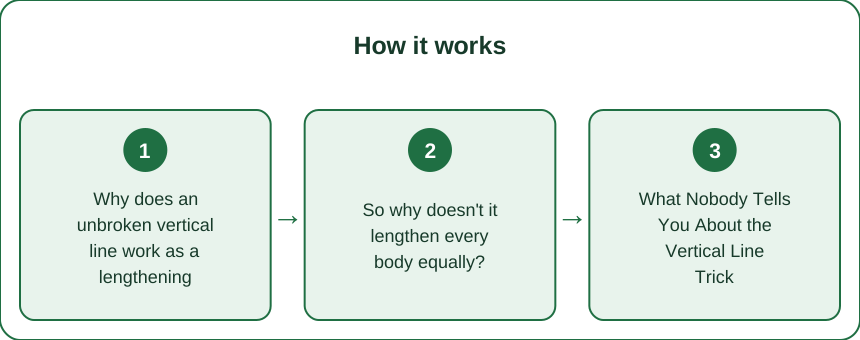
Why does an unbroken vertical line work as a lengthening illusion at all?
A continuous line of color guides the eye in one uninterrupted sweep from top to bottom, and the eye interprets that uninterrupted sweep as a longer overall shape than the same body broken into visually separate color blocks.
This is a well-established principle in visual perception research on elongation, not specific to fashion — the same effect shows up in architecture and graphic design.
So why doesn’t it lengthen every body equally?
Where your natural waist sits relative to your leg length determines how much visual “line” is actually available to work with — a higher natural waist gives more uninterrupted vertical space below it than a lower one, meaning the same monochrome outfit has more elongating runway on some bodies than others.
A visible horizontal break — a contrasting waistband, a cropped hem, a color change at the knee — interrupts the line regardless of body type, which is often the real reason an outfit “doesn’t work” rather than the technique itself failing.
What Nobody Tells You About the Vertical Line Trick
Shoe color matching to the pant hem matters more than most people realize — a visible color break right at the ankle, where the eye naturally lands, can undercut an otherwise perfect vertical line higher up the body.
A less obvious detail: texture changes read as visual breaks too, even within the same color — a matte top over a slightly glossy bottom, even in identical shades, can subtly interrupt the continuous-line effect.
Does this mean the trick is pointless for some body types?
No — it means the placement of the color block matters more than the color choice itself for bodies where the natural waist sits lower; starting the monochrome column from a higher point (like a high-waisted bottom) recreates more of the effect regardless of natural proportions.
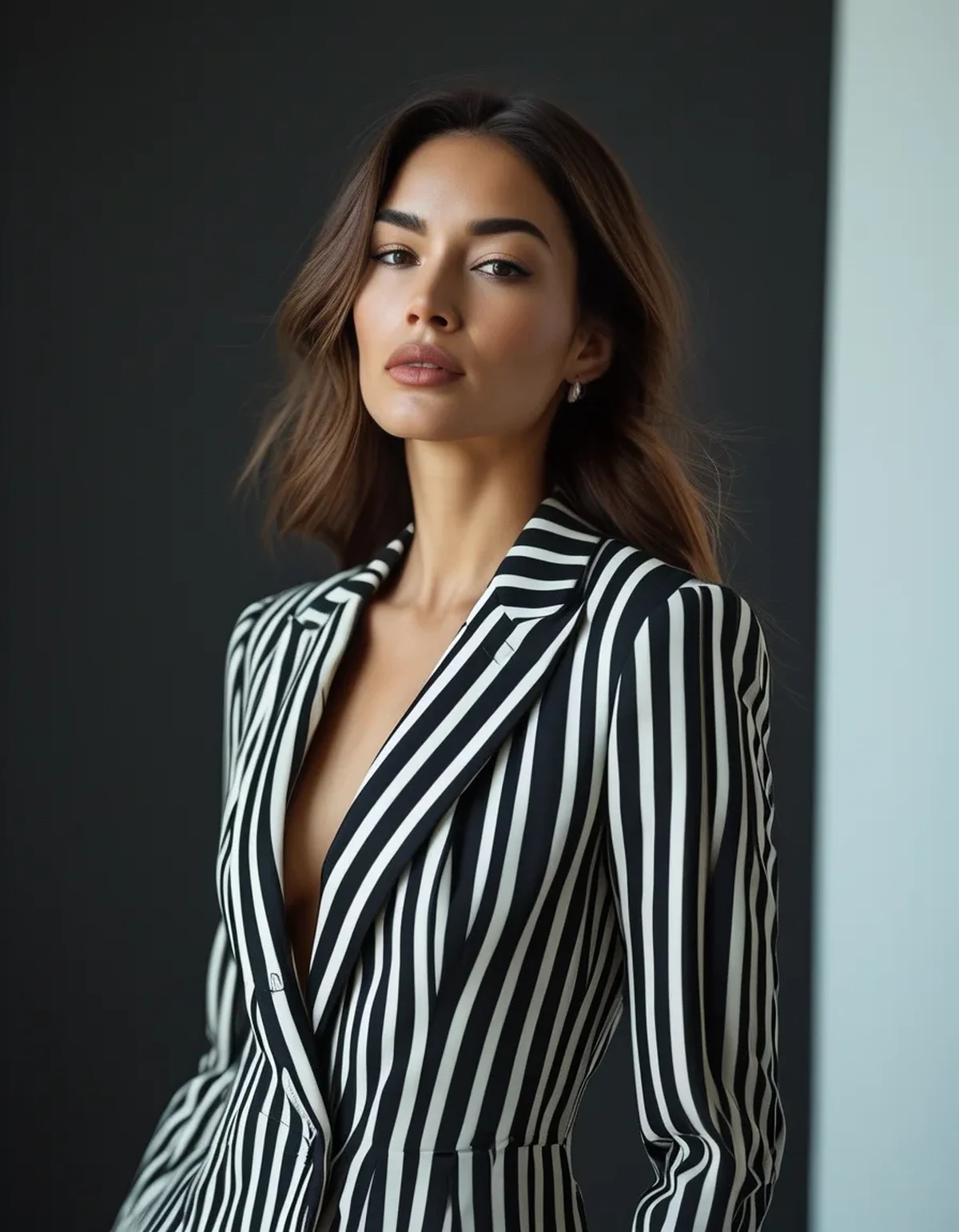
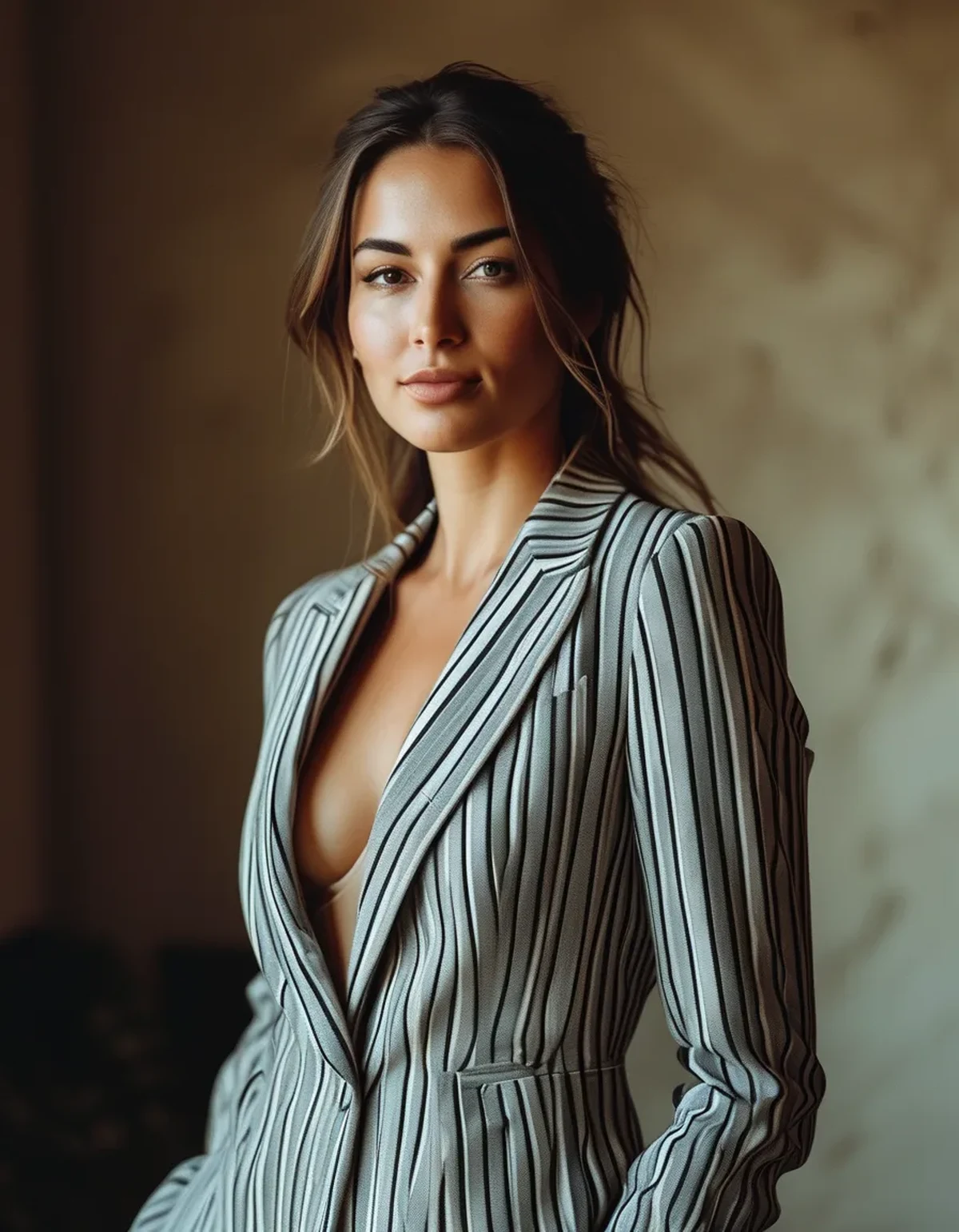
Vertical striping within the fabric itself can add a secondary elongating effect that’s less dependent on natural waist placement, offering another route to the same result.
FAQ: Vertical Line Leg Lengthening Questions, Answered
Does the vertical line trick work with patterns, or only solid colors?
Solid colors generally produce the strongest effect, though subtle vertical patterns (like pinstripes) can reinforce rather than break the line.
Do heels matter as much as the outfit itself?
A pointed toe or nude shoe that continues the leg line does add to the effect, though the outfit’s color continuity does most of the visual work.
Can this trick work with two colors instead of one?
Yes, if the transition point is placed high (like at the waist) and the darker or more saturated tone runs the full leg length below it.
TL;DR:
- An unbroken vertical color line is what creates the leg-lengthening illusion, not the color itself
- Natural waist-to-leg proportions determine how much uninterrupted line is available on a given body
- Shoe color and texture changes can quietly break the line even when the outfit color matches
- Starting the monochrome block higher recreates the effect for bodies where it works less naturally
It’s not that the trick fails on some bodies — it’s that the line needs to be built around where it actually starts.
See It in Motion
Seen here: High Waist Bootcut Yoga Pants with Hidden Pocket — shop it on bubblelime.com
Keep Reading
This article is for general informational and styling purposes only. Fit, sizing, and product availability may vary — check current details before purchasing.