The Sneaker Rule That Changes Your Leg Line
Quick Answer: The eye measures your legs from hip to wherever the leg line visibly stops - and a bulky, contrast-colored, high-collared sneaker stops it at the ankle, while a low-profile shoe in a tone matching your legging or your skin lets the line run to the floor. The rule: match the shoe tone to the leg, keep the silhouette slim and the ankle collar low, and mind the gap between hem and shoe. Applied to the same body in the same leggings, the sneaker swap reads as one to three inches of leg - which is why it out-performs almost every other proportion trick per dollar.
Same leggings, same mirror, two pairs of sneakers - and one photo looks noticeably longer-legged than the other. The difference is standing on your feet.

How do shoes change where your legs end?
The mechanics are pure line-reading, and they compound with everything else you wear.
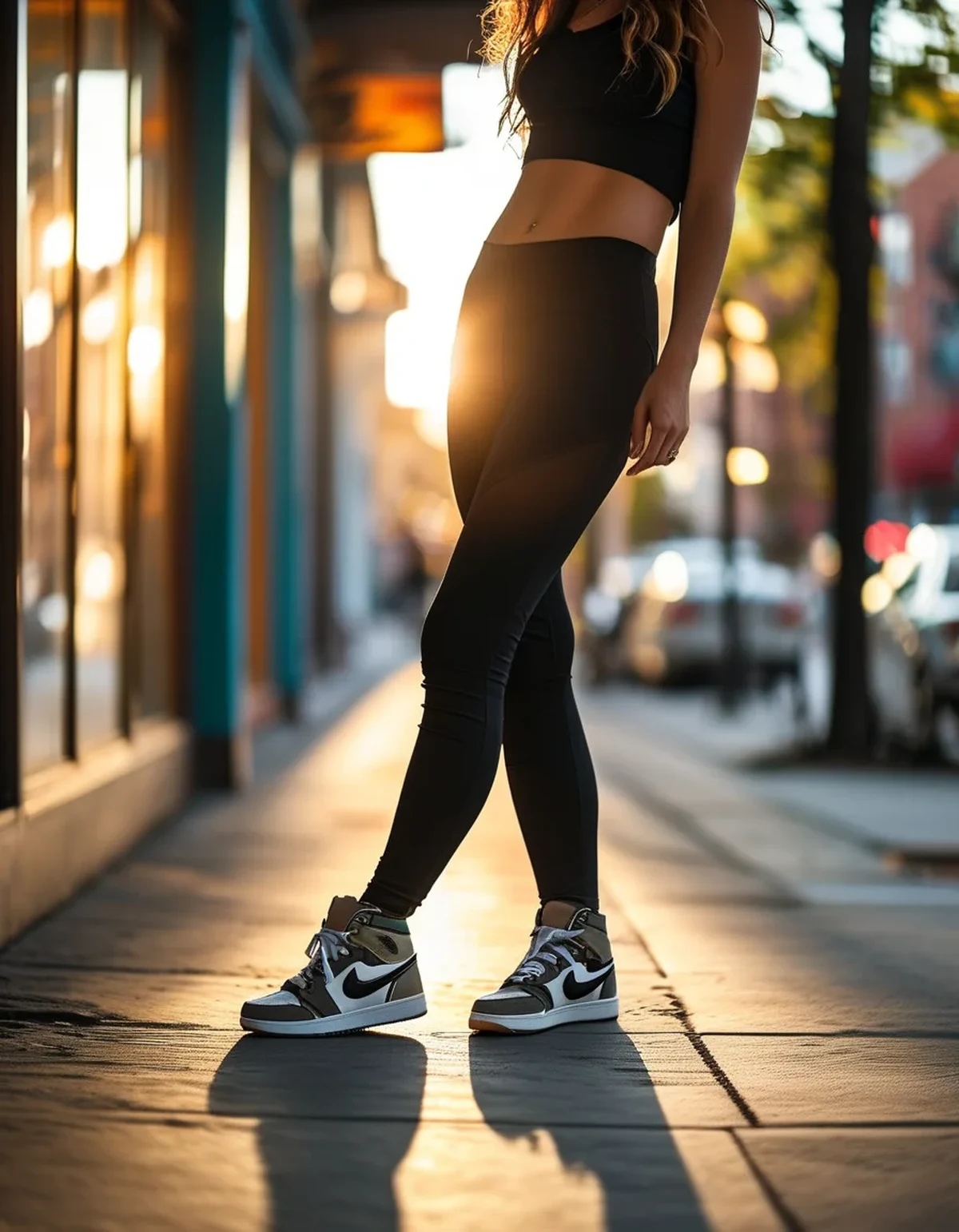
The eye traces the leg until something interrupts it. A continuous column of color from hip to floor reads as all leg. Every interruption - a contrast shoe, a thick sole in a new color, a high padded collar, visible sock - plants a horizontal line, and the eye ends the leg at the first strong one it hits.
Contrast is the interrupter-in-chief. Black leggings into white chunky sneakers draws a bright horizontal exactly at your ankle - the shortest possible reading of the leg. The same leggings into black or charcoal shoes extends the dark column to the floor, and the leg reads to the ground.
Bulk widens the base. A heavy, wide sneaker under a slim leg line creates a T-shape that visually shortens by contrast - the leg looks slimmer but stumpier against the mass. Slim profiles keep the column’s width consistent to the floor.
Collar height eats ankle. High-top and padded-collar shoes cover the narrowest, most line-flattering part of the leg. The visible ankle - or a low collar that sits below it - is worth more inches than any insole.
The hem-to-shoe gap is the handoff zone. Where the legging ends and the shoe begins decides whether the line flows or stutters: a clean small gap showing ankle flows; bunched fabric piling onto a high collar stutters.
And angles multiply everything. Photos taken from slightly below lengthen whatever line you built - which is why the same trick looks even stronger on camera than in the mirror.
What is the actual rule, in practice?
Three moves, in priority order - the first is worth more than the other two combined.
Move one: tone-match shoe to leg. With leggings, match the sneaker to the legging color family - black yoga pants into black-soled black sneakers is the canonical infinite-leg formula, and it works identically in navy, charcoal, and deep olive. With bare legs or nude tones, shoes near your skin tone do the same job - the column just changes color. Sole included: a white midsole under a black shoe reintroduces the stripe you just removed.
Move two: go low and slim. Low-profile silhouettes - court styles, slim runners, minimal trainers - with collars sitting at or below the ankle bone. The test: side-on in a mirror, the shoe should look like the leg’s ending, not a separate object the leg stands on.
Move three: manage the handoff. Cropped and 7/8 leggings ending above the ankle create a deliberate, clean gap that reads intentional and long - this is why cropped leggings with low sneakers out-lengthen full-length pairs puddling onto high collars. Full-length hems should kiss the shoe collar, not stack on it. Socks stay invisible or match the column.
The formula assembled: high-waisted leggings to raise the line’s start, one continuous color to the floor, a slim tone-matched shoe to finish it. Waistband placement sets where legs begin; the sneaker rule sets where they end; together they own both ends of the measurement.
And when you want the chunky shoe anyway - because fashion is allowed - keep it tone-matched. A monochrome chunky sneaker costs a fraction of what a contrast one does; the bulk stays, the stripe goes.
Myth vs Fact: Shoes and Leg Length
Myth: Heels are the only shoes that lengthen legs. Fact: Heels add literal inches; line management adds visual ones - and the two are independent. A tone-matched slim sneaker frequently out-lengthens a contrast-colored heel in photos, because the heel’s added height is spent back on the horizontal line its color draws at the ankle.
Myth: White sneakers go with everything. Fact: They coordinate with everything and shorten most things - white is the highest-contrast interrupter under dark leggings. They cost the least with light-toned bottoms and bare legs, which is exactly where street-style photos deploy them.
Myth: Platform sneakers lengthen because they add height. Fact: Split verdict. A slim platform in leg-matching tone adds height and keeps the line - genuinely lengthening. A chunky contrast platform adds an inch of height and a heavy horizontal interruption that costs more than the inch bought.
Myth: The trick only works with leggings. Fact: It works with every slim silhouette - skinny jeans, tights, tapered joggers - and translates to wide-leg looks as hem logic: full-length wide hems breaking over a slim shoe build the longest line in that category. The principle is always the same; only the column changes.
Myth: Socks are neutral. Fact: A visible contrast sock is a second ankle stripe - the classic white crew sock over black leggings shortens twice. No-show socks, or socks matching the column, keep the line intact; deliberately matched tall socks can even extend it.
Myth: This is only about looking taller. Fact: It is about proportion control. The same rules run in reverse - contrast shoes and high collars deliberately ground an outfit or crop a line - which is why knowing the rule beats obeying it: you choose the reading.
How do you build a leg-line shoe rack?
Four slots cover every outfit; tone-matching does the rest.
Slot one: the black column-finisher. Slim black sneaker, black sole, low collar - the workhorse under black and charcoal leggings, dark jeans, and winter tights. If your bottoms skew dark, this shoe carries half your wardrobe’s leg line alone.
Slot two: the light-neutral. Cream, bone, or greige low-profile pair - not stark white - for light bottoms, nude tones, and bare-leg months. The softened shade coordinates nearly as widely as white while drawing a fraction of the ankle contrast.
Slot three: the skin-tone-adjacent flat or sandal. For skirts, dresses, and shorts season: minimal shoes near your skin tone extend bare legs to the floor - the warm-weather version of the same column.
Slot four: the deliberate statement. The chunky, the contrast, the fun pair - owned and worn on purpose, with the understanding of what it does to the line. Best deployed with light bottoms, monochrome outfits it can accent, or days when grounding the look is the point.
Audit with the phone, not the mirror. Same leggings, each shoe, one photo from knee height - the leg-line difference between pairs is instantly obvious on camera and surprisingly easy to rationalize away in a mirror.
Then let hems finish the system. Pair the rack against your bottoms: cropped leggings and 7/8 lengths want the low collars and a visible ankle; full-length flares want enough shoe height that the hem hovers; joggers want the cuff landing at the collar, never stacked. Every hem has a best-shoe answer, and after one photo session you will know all of yours.
FAQ: Shoe and Leg Line Questions, Answered
What sneakers make legs look longer?
Slim, low-profile pairs in a tone matching your bottoms - black-on-black under dark leggings, cream or greige under light ones - with collars at or below the ankle bone and soles in the same tone. The continuous color column to the floor is what reads as length.
Do white sneakers make legs look shorter?
Under dark bottoms, yes - the bright shoe draws a high-contrast line at the ankle, ending the leg there. White works best with light bottoms and bare legs, where the contrast collapses and the column stays continuous.
Should leggings cover my sneakers or stop above them?
Either flows if the handoff is clean: cropped or 7/8 hems with a visible ankle above a low shoe, or full-length hems just kissing the collar. What shortens is stacking - fabric bunched on a high padded collar stutters the line at its narrowest point.
Do chunky sneakers ruin leg proportions?
Contrast-colored chunky pairs cost the most - bulk plus a bright horizontal at the ankle. Tone-matched monochrome chunky styles keep most of the length while delivering the trend; if you love the shoe, buy it in your leggings color.
Does this work without leggings?
Completely - the column logic applies to jeans, trousers, tights, and bare legs alike. Match shoe to whatever the eye will read as leg: dark shoes under dark trousers, skin-tone shoes with skirts and dresses, and hems breaking cleanly over slim profiles in every category.
TL;DR:
- The eye ends your legs at the first strong horizontal - usually your shoe’s color contrast or collar.
- Rule: tone-match shoe to leg, keep the profile slim and the collar low, keep the hem-to-shoe handoff clean.
- Black-on-black under dark leggings and skin-tone shoes with bare legs are the two canonical columns.
- Visible contrast socks and stacked hems are self-inflicted ankle stripes.
- Build four slots - dark finisher, light neutral, skin-tone flat, deliberate statement - and photo-audit them once.
You already own the legs; the sneakers decide where they officially end. Choose the pair that lets the line finish at the floor.
See It in Motion
Seen here: High Waist Yoga Leggings with Side Pockets — shop it on bubblelime.com
Keep Reading
This article is for general informational and styling purposes only. Fit, sizing, and product availability may vary — check current details before purchasing.